


The Good Life
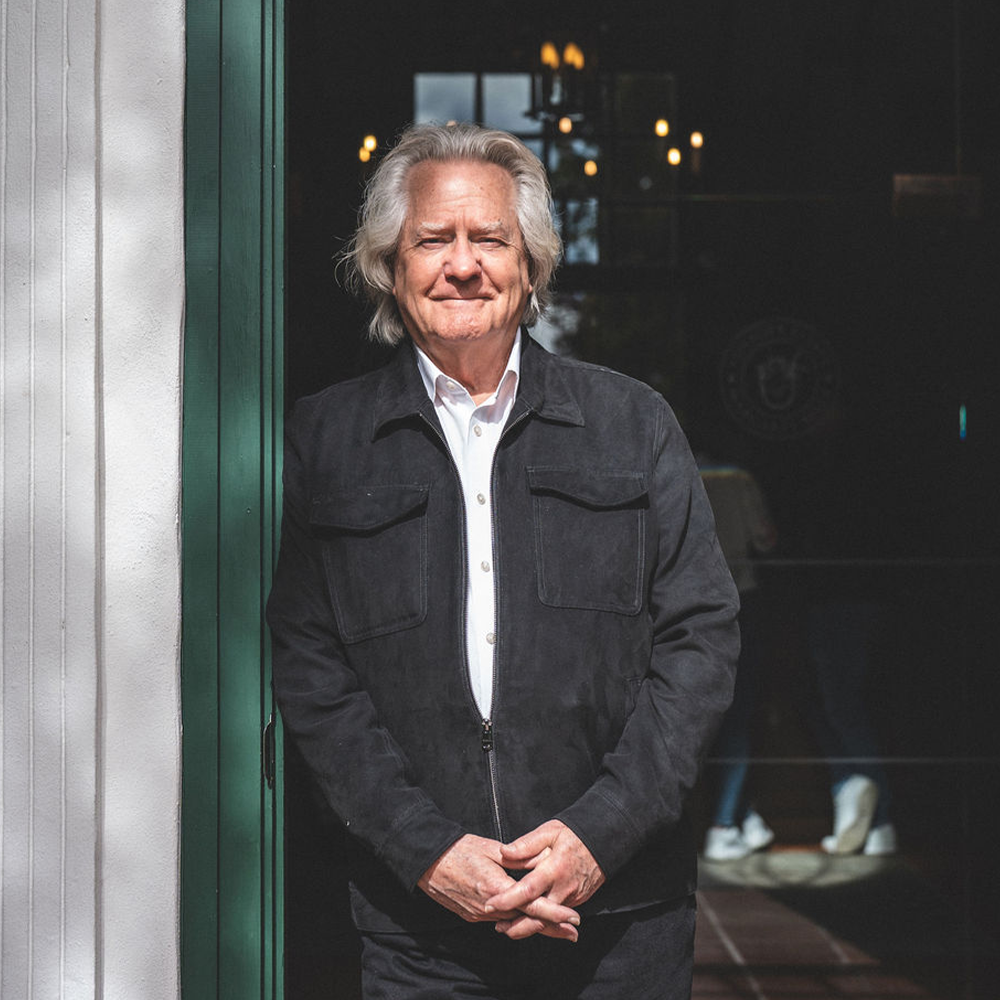
Last year, we were honoured to welcome world-renowned author and Philosopher, A.C. Grayling, as our week-long Philosopher in Residence.
His reflections – on wine, beauty and the rhythms of a life well lived – unfolded slowly, shaped by tranquil mornings, deep conversations, and the quiet draw of the vineyard.
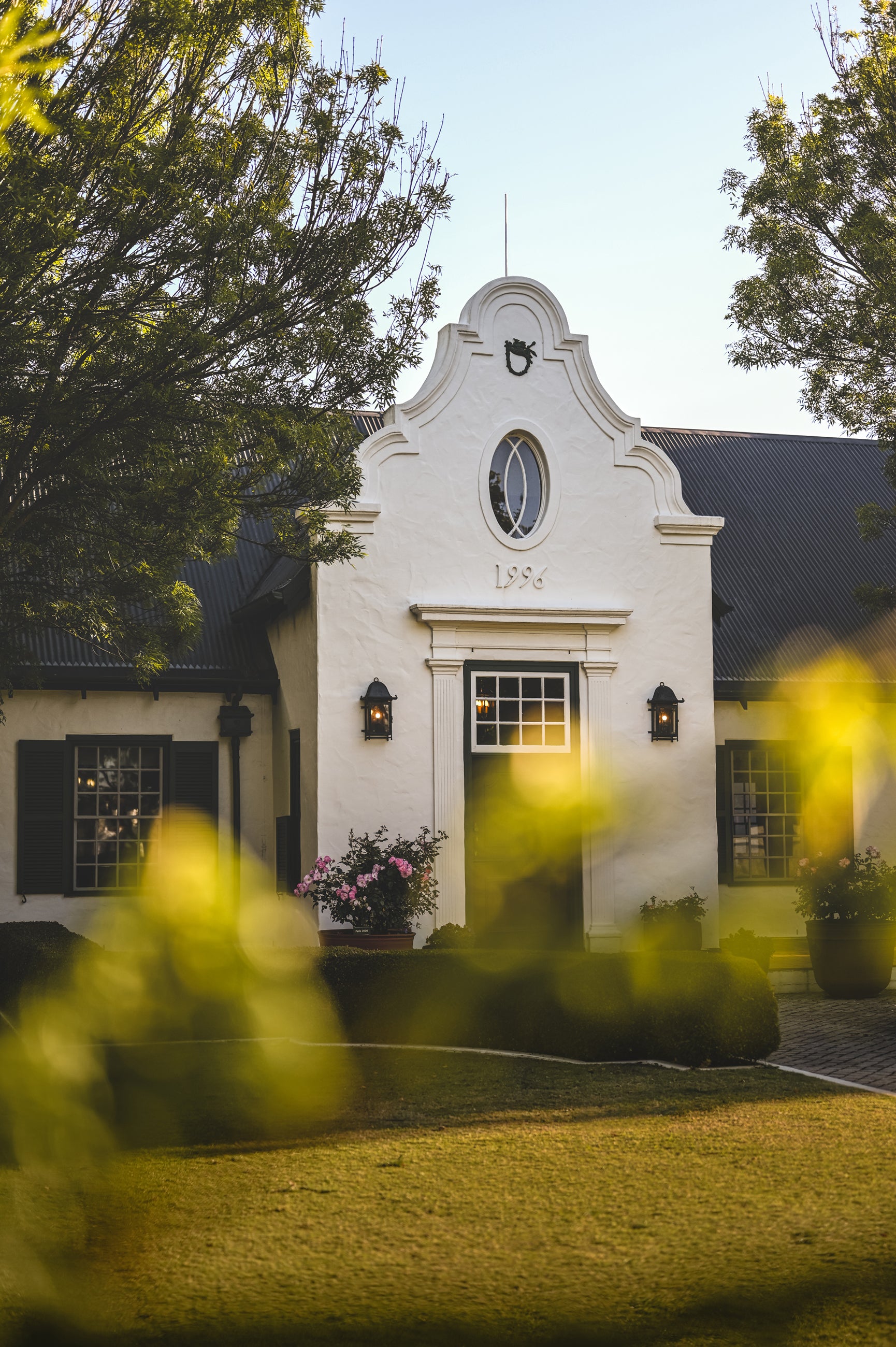
 From the veranda of the house on the Voyager Estate at Margaret River I see a vineyard, sloping gently from a shelterbelt down to a wood of karri trees lifting their multiple crowns high into the sky along the limit of the view. The rows of vines are still in full leaf, but it is after the harvest and the first flush of autumn gold is spreading across the vista; elsewhere on the Estate wine is being made, the distinctive and delicious Voyager Chardonnay and Cabernet vintages. It is tranquil here, quiet, idyllic; the breeze in the trees and the call of birds are the only sounds. ‘Paradise’ originally meant ‘garden’; everything that promoted the latter word into the former is on display here.
Were you to ask what a Professor of Philosophy is doing on a paradisical wine estate in Western Australia for two luxurious weeks, the answer would have to be: he struck it lucky! On the views of certain fellow-philosophers from ancient times and distant climes the answer might be: he must have done something good in a former life. This present life, especially in a place so beautiful where he has been so warmly welcomed and kindly treated, requires only the first explanation: luck. As a visiting author at the Margaret River Readers and Writers Festival a year earlier I met Voyager’s owner, Alexandra Burt, whose largeness of generosity and imagination is prodigious, indeed legendary. The suggestion was made – and accepted with alacrity – to be ‘philosopher in residence’ on the estate for a fortnight: and here I am.
My only duty, and a very pleasant one, was to engage with Voyager’s staff and visitors on the perennial and important topic of ‘the good life’. How appropriate: for the experience of being here – of being, existing, in the purlieus of the elements that constitute a lived experience of the good, is a definitive example of the concept of ‘the good life’ itself. All the factors that give meaning to the phrase here combine: encountering kindness and generosity, making friends and spending time with them, learning new things, marinating in surroundings of natural beauty, having time to think, reflect, gain perspective, stepping aside from routine and the patterns of life and work that shape the ‘normal’ activities of one’s days, is a special blessing. Elsewhere the world labours on its troubled and disturbing way – conflicts, turmoil, the suffering of so many among our fellows in the human story; and it is a responsibility for any reflective person to be not just aware of these hard facts, but engaged in whatever way one can, large or small, in contesting them. But everyone needs a moment of pause too, to touch again the face of the good, of the possibilities of experience that, if the world were a fairer and more sensible place, would be available to all.

Consider the nodes in the description just given of living a ‘good life’. Other uses of that phrase might denote a life of strict piety and moral constraint, or it might denote a riot of partying and careless over-indulgence, but in the philosophical sense – the one at issue here – it means ‘the life fully worth living; the life that feels good to live’, and not because it is a life wrapped in the cotton-wool of personal immunity from stresses and challenges, but because it fulfils two requirements: first, that it is a life that aligns with one’s values and what one seeks to achieve, and second, that its effects on other people and the world around one are positive. This second requirement is important because humans are essentially social beings, embedded in the social and natural worlds, and our relationships within both are a key to the very idea of ‘the good’. For consider: no-one can make a sustainable case for gaining pleasure in ways that cause harm to other people and things. On the contrary, the sense that one’s activities contribute benefit beyond oneself in some way, however small, has the reflexive effect of adding to one’s own feeling of ‘being and doing well’, of flourishing, which is what living in conformity with ‘the good’ is all about.
So – those nodes: kindness, generosity, friendship; learning new things; being alert and alive to beauty – natural beauty, the beauty in human character at its best, the beauty displayed in skill and art – taking time to think and reflect, appreciating what has value whether in things or in circumstances; all these embraced in the idea of engaging, listening, seeing: these are the pixels that make up a life lived in its best moments in its best way. Consider each in turn.
Kindness and generosity are the fundamentals of morality. To treat others with consideration and positivity is to give them space, to invite friendliness, to reap the benefits of mutuality. Of course, there are bad people, defined by their doing harm in all the various ways that harm can be done, and that is unacceptable: a version of the saying ‘it’s good to have an open mind but not so open that your brains fall out’ applies here, in the form of ‘it’s good to have an open heart but not so open that you too readily forgive selfishness, cruelty, malignity, spite’. No: such things must be called out and challenged. But in fact, the majority of people respond to kindness and generosity in the same spirit, so to summon their best selves from the enactment of one’s own best self is the way to go. To be open to others is thereby to invite some of the best possibilities of the good life.
Friendship – ah yes! This, as Aristotle long ago urged us to recognise, is the highest and most achieved of human relationships. If we become friends with our lovers, spouses, children, parents, siblings, colleagues, the people we encounter in the daily round, then even as they remain spouses, children, parents, siblings, we add a dimension to those different relationships that takes them to a higher plain. My beloved brother John is with me here, sharing the delight of the place; our friendship proves the point. Oscar Wilde defined a friend as ‘someone who will you stab you in the front’, and there is deep wisdom in that. You can add ‘and will have your back’ too. What is a life without friendship? With friends we share, we enjoy laughter, gossip, the unfolding narratives of life, relaxation; to them we can turn in need, to us they can turn in their need, honouring us with confidences and a chance to do good.
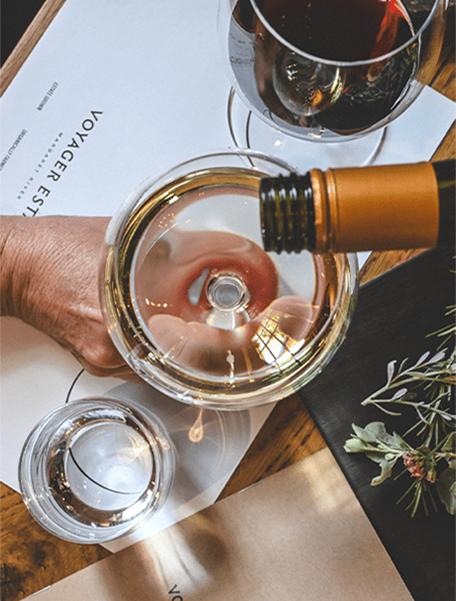
Learning new things: touring the vineyards and the winery in expert company was an eye-opener. Such intricacy and artistry in every phase of the process, such a richness of experience, knowledge and judgment: wine tasted different, and even better, after Voyager days of learning about the high craft involved. Life should be illuminated by just such a process: a continual education, the indulgence of an unending desire to know more, see further, understand better; to take every opportunity to expand the horizon of one’s perceptions. One should keep a child’s heart, curious and enthusiastic, unappeasably hungry to harvest ideas and information that light up the world with fascinations. I ask my students to imagine walking down a street with houses on each side, and to contemplate how different the experience of doing so would be if they knew the stories, the histories, of what happened or is happening in each house they pass – how the street would leap into life as just such a theatre of vividness, yielding surprises, wonderment, amusement, even indeed a deeper consciousness of the suffering, grief and trouble that is a factor in almost all human existence – for seeing this too is part of one’s life-long education, and the deepening of one’s sympathies.
Being alert and alive to what one encounters, awake, conscious, paying attention and noticing things, is the filling of experience as chocolate is the filling in a cake. It’s possible to walk through life seeing little, focusing on a narrow alley immediately before one’s feet, thereby missing far too much that would make life richer and vastly more interesting. Talk of ‘mindfulness’ is allied to this; it’s just another term for ‘noticing’, ‘paying attention’ – and as a result extracting far more of the juice in things. As Walter Pater said, to fail to discern in each moment of experience its full value ‘is, on this short day of frost and sun, to sleep before evening’.
And being alive to beauty, whether natural or in human character, whether in ideas or the products of skill and art, is a special case of the alertness that enriches experience. The world and all it contains is stunning in its beauties. Full consciousness of them is not only life-enhancing in itself, but is a motivation to combat the ugliness that is also a too-common feature of the world – the ugliness of crime, of war, of poverty and injustice; the sorrowful cry, ‘Why do such things happen, why is there so much moral and actual ugliness in the world?’ has as its response, ‘Well then: let us strive to promote the good, in whatever way we can, big or small; let us sew even the smallest sequin of beauty onto the fabric of things, by something we do or say, by something we make, by the way we live, vote, choose, experience’. We would thereby be putting to work that Pauline injunction, ‘Do not be overcome by evil, but overcome evil with good’.
If one lives a good life in the sense depicted here, one is in a better position to help others than if one lives in a deprived or narrow way. To invoke Aristotle again: he pointed out that to be able to care for the interests of others productively, one has first to ensure that one’s own interests are catered for. If you have little in the way of material or mental resources, you have little to give. True wealth is measured by what one spends and gives, not in what one has stored away. For wealth consist in the experience that is purchased by spending and giving; hoarding resources, not putting them to work, brings nothing in the way of experience. And what applies to material resource applies to mental and emotional ones too: ‘a full heart always has room for more, but an empty heart never has room for anything’.
Sitting here on the veranda of a house on the Voyager Estate, the vineyard stretching before me and the karri trees reaching up into the warm autumn sunlight, I’m acutely conscious of having met with all the elements of life that feels good to live: beauty, the generosity of my hostess and her staff, the time to reflect in tranquillity, the new things learned and the friendships made. In the lovely transaction of giving it is I who have been far the net receiver, and this little essay is a record of gratitude for it. As a voyager to Voyager I’ve landed on an exquisite shore, as Odysseus did when he landed on the island of Phaeacia, the realm of King Alcinous and Queen Arete, the queen’s name itself, arête, meaning in ancient Greek ‘excellence, goodness, virtue, the full realisation of one's potential – a multifaceted concept embracing both moral virtue and excellence in skill or ability’. I met with that here, in Voyager the place; I met with that in the people of Voyager, above all in its queen; and it made me feel the possibility of striving towards the same. As you can imagine, it was wonderful: it was a taste of the good life at its best.
Photography by Ovis Creative.